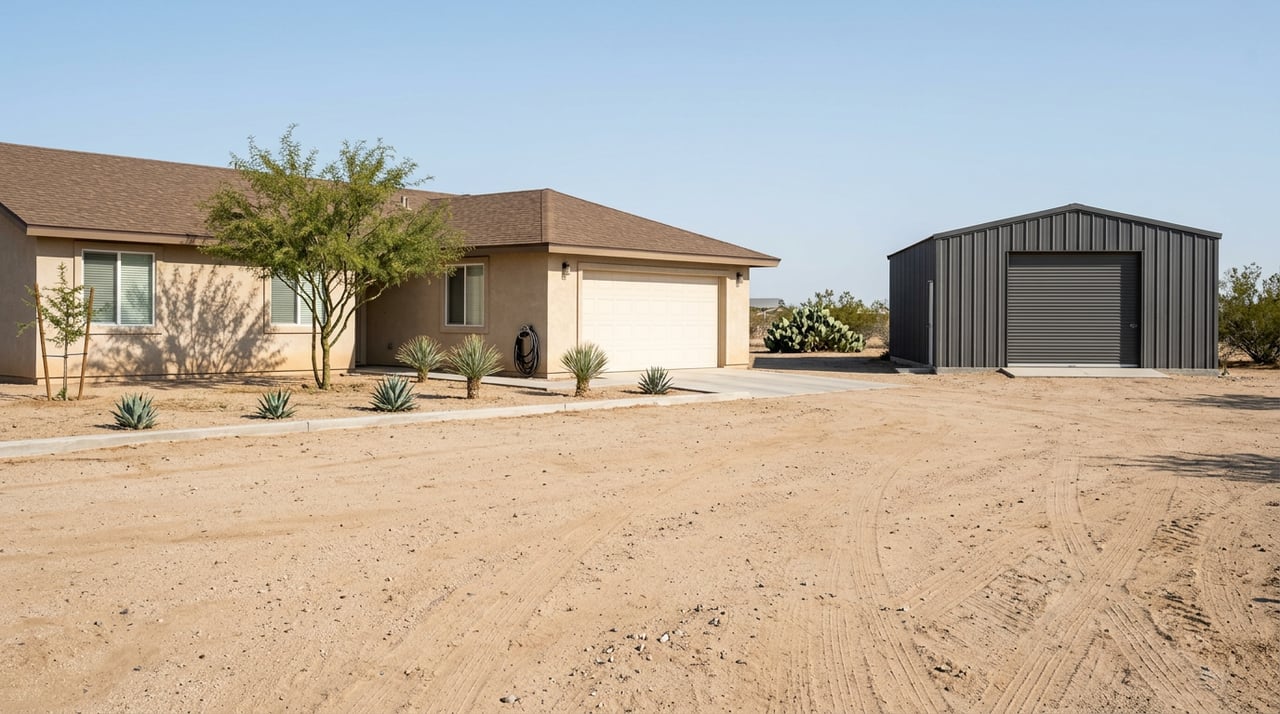
Buying On Acreage In Hesperia: Costs And Tradeoffs
March 24, 2026
March 24, 2026
Craving wide-open space, room for animals or toys, and a little more privacy than a tract lot offers? Buying on acreage in Hesperia can deliver all that, but it also changes your cost profile and the homework you need to do before you write an offer. Water, septic, utilities, wildfire rules, and insurance all work a bit differently on larger High Desert parcels. In this guide, you’ll learn the key tradeoffs, typical cost ranges, and the steps to protect your budget and timeline. Let’s dive in.
Acreage living often means self-reliance for basic services. Many parcels rely on a private well and a septic system instead of city water and sewer. Driveways are longer. Utility connections can be farther from the lot line. You also need to plan for defensible space and confirm insurance options.
Inside Hesperia city limits, some services are straightforward, especially if a parcel is already connected. Outside the city or on the edges, service availability can vary a lot from one APN to the next. The biggest early wins come from verifying who provides water, whether sewer is available, and what fire and utility requirements apply to that exact location.
Inside the city, many homes are served by the Hesperia Water District, which operates municipal wells and reservoirs. Not every nearby acreage lot is in that service boundary, so you need to confirm coverage for the APN you’re considering. The city’s water planning documents explain the district’s role and supply context, which helps you understand where public service is typical and where it is not. You can review the city’s water supply assessment to learn how service boundaries work and why they matter for new hookups.
If a parcel is not within the city water system, you may see service from a county service area or a small mutual system. Some rural lots do not have public water at all, which means you will rely on a private domestic well. In San Bernardino County, any well construction, reconstruction, or destruction requires a county permit and a licensed C-57 well contractor.
Well costs vary based on depth and geology. In the High Desert, many wells run several hundred feet deep, and deeper or harder formations push costs higher. Industry guidance for California puts a typical complete domestic-well system in the range of about $15,000 to $60,000 plus, including pump, electrical, and basic hookup. Always get local bids because conditions change block by block.
Budget for county permits and required water quality testing. Initial lab panels typically include bacteria and nitrate and may include other analytes based on local conditions. As a private well owner, you are responsible for periodic testing and maintenance over time.
Hesperia overlies the Mojave River groundwater basin, which is under a court adjudication. The Mojave Water Agency serves as Watermaster and manages production, regional recharge, and imported supplies. While the adjudication focuses on larger producers, basin management and assessments can influence long-term regional availability and costs. If you plan a new well, it is wise to confirm the parcel’s subarea and any applicable rules with the Watermaster.
Where sewer is not available, you will need an onsite wastewater treatment system. San Bernardino County implements a Local Agency Management Program that requires a qualified site evaluation and a percolation test before a new system is approved. Designs must meet setback and siting standards that protect groundwater. In some areas, you may also encounter special maintenance or monitoring requirements.
A percolation test is a separate step and cost. Typical PERC testing ranges from a few hundred dollars into the low thousands depending on the site and number of test holes. Conventional gravity systems in favorable soils often land in the low to mid five figures to install. Advanced systems for challenging soils or shallow groundwater commonly reach the mid to high five figures. Plan for inspections and county review timelines that can take several weeks, especially if an engineered system is required.
Once in service, budget for routine inspections and pump-outs. A practical rule of thumb is an inspection every 1 to 3 years and pumping generally every 3 to 5 years, with typical pump-out costs in the low hundreds per visit depending on tank size and access. Keep receipts and maintenance records because buyers and the county may ask for them in future transactions.
Jurisdiction matters. If the parcel sits inside Hesperia city limits, the City’s Development Code governs zoning, accessory structures, and ADUs. If the parcel is outside the city, San Bernardino County’s Land Use Services rules apply. Always verify the exact jurisdiction and zoning before you plan improvements.
California has strong ADU laws, and Hesperia has updated its local rules to comply. The State Department of Housing and Community Development reviewed the city’s ordinance and requested amendments to align with state law. In practice, ADUs are allowed widely, but site-specific rules for size, placement, and utility capacity still apply. If your lot is on septic, adding an ADU may require a capacity review or a system upgrade under the county’s LAMP.
For barns, shops, or animal-keeping, setback and building-permit rules vary by zone. Confirm allowed structure sizes, heights, and animal allowances for the parcel’s zoning designation. Manufactured and mobile homes also have specific building and site-permit steps, so plan ahead if that is part of your vision.
Parts of San Bernardino County are mapped in Moderate, High, or Very High Fire Hazard Severity Zones. While much of Hesperia is lower fuel-load desert scrub, parcels near foothills or heavier vegetation can fall into higher-severity mapping. California law requires defensible space in applicable areas, often up to 100 feet or to the property line, and local fire agencies can require mitigation for new construction. These rules influence site design, vegetation management, and some insurance underwriting criteria.
Insurance has become more challenging in higher wildfire-risk parts of California. Some owners must use the FAIR Plan or surplus-lines policies when admitted carriers will not offer coverage. Premiums can hinge on defensible space, roofing, siding, and fire access. You should run quotes on the specific parcel early and confirm any mitigation steps that keep premiums affordable.
Electric service in Hesperia is provided by Southern California Edison. If a parcel does not have power at the lot line, ask SCE for a line-extension estimate early. Costs can include trenching, transformer work, meters, and a customer contribution. In some cases, solar plus storage can be a practical alternative if grid extension proves expensive, but confirm permitting and interconnection rules first.
Also plan for driveway grading and maintenance, fencing, and extra fuel costs to reach services if your parcel sits farther from town centers. These ongoing items add up and should be part of your annual budget.
Use these ranges for initial planning only and obtain parcel-specific bids:
If acreage living in Hesperia is calling your name, a little upfront due diligence goes a long way. You deserve clear answers on water, septic, utilities, and insurance so you can move forward with confidence. If you want a warm, hands-on guide for the process, connect with Kimberly Ybarra to talk through your goals and next steps.
Stay up to date on the latest real estate trends.
Get assistance in determining current property value, crafting a competitive offer, writing and negotiating a contract, and much more. Contact me today.