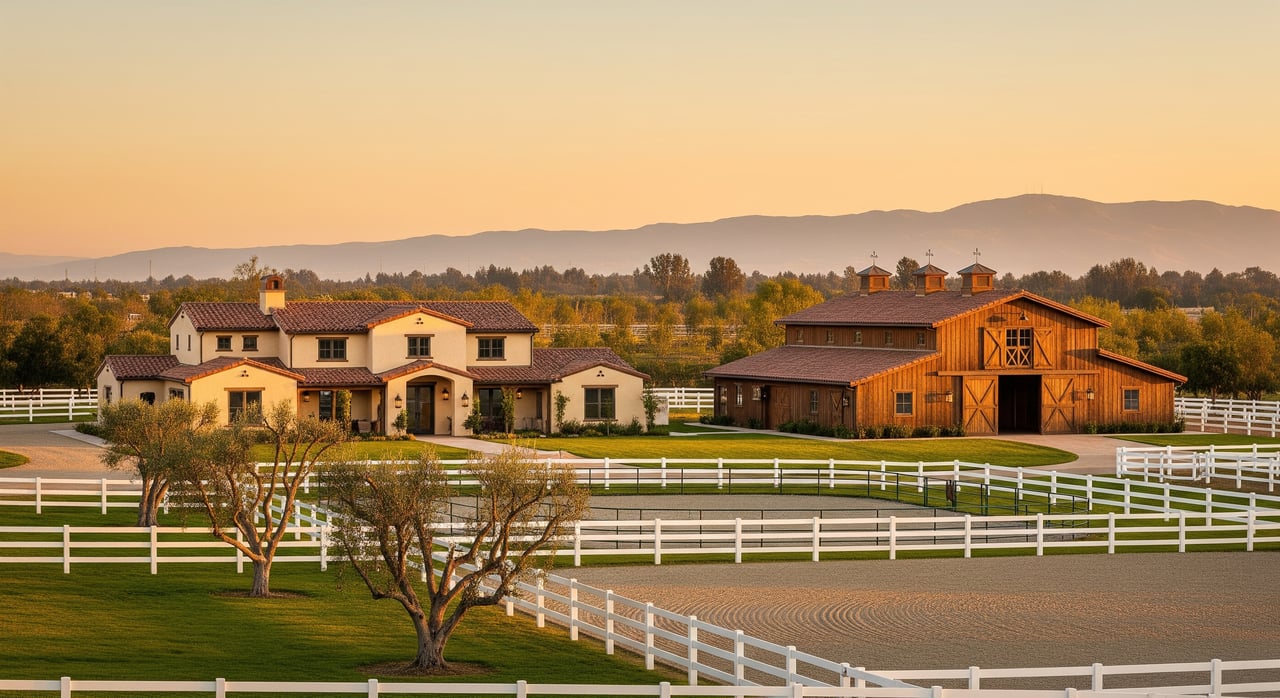
Pricing Equestrian And Acreage Homes In Woodcrest
January 15, 2026
January 15, 2026
Is one “2-acre horse property” in Woodcrest really worth more than another that looks similar online? If you have asked that while scrolling listings, you are not alone. Pricing equestrian and acreage homes is different because the land’s utility and the quality of the improvements drive value more than bed-bath counts. In this guide, you will learn how usable acreage, barns, arenas, access, and permits shape price so you can set a confident number or evaluate offers with clarity. Let’s dive in.
When buyers shop for horse or acreage properties, they focus on usable acreage. This is the land you can actually use for turnout, barns, arenas, gardens, or future building sites after you subtract steep slopes, flood-prone areas, setbacks, utility easements, and restricted zones. Small differences in functional acres can change daily utility and price sensitivity.
To validate usable acreage, review parcel maps and topographic information, then walk the site. If you are selling, document how you calculated usable acres. If you are buying, verify with a site visit and request any calculations the seller used.
Gentle grades and well-drained soils increase utility and reduce the cost of arenas and drainage work. Poor soils, seasonal standing water, or erosion risk cut into usable acres and may require mitigation. In Woodcrest, drainage and slope can vary from one street to the next, so confirm these characteristics early.
If you plan to add or resurface an arena, the subsurface build and drainage plan are major cost drivers. A property with stable soils and proven drainage can justify a stronger price.
For equestrian use, water capacity matters. Well yield in gallons per minute, storage tanks, and any municipal water availability affect how many animals you can support and how much landscaping you can maintain. Buyers often ask for documented well tests or a recent pump test. Sellers should gather well logs, water quality tests, and any usage history to reduce uncertainty.
If the property is on a septic system, confirm septic capacity, permit status, and the leach field location. Septic capacity should align with your home’s bedroom count and your future plans.
Daily function depends on the basics. Power to barns and gates, lighting, and reliable internet or cellular service improve livability. Road access also matters. Paved versus dirt, county maintained versus private, and year-round accessibility will influence both price and insurability. If access crosses private land, clarify maintenance agreements and easements.
Barn features vary widely. Count stalls and note stall size, ventilation, flooring, and the presence of wash racks, tack and feed rooms, and hay storage. The construction type and quality also matter. Engineered barns with fire-resistant materials and sound foundations often command a premium over basic pole barns.
Ancillary buildings like shops, equipment storage, guest quarters, or caretaker space can widen your buyer pool. Document permit status and recent maintenance for each improvement.
Safe, continuous fencing in good condition is a major value signal for horse buyers. Note fencing type, height, and continuity. Buyers look for a practical paddock layout, options for pasture rotation, and designated sacrifice areas. The number and size of paddocks should match your likely buyer profile.
Arena quality can be a tipping point. Dimensions that match common disciplines, professional footing, a solid base, and drainage all influence price. Round pens and access to on-property or nearby multi-use trails add recreational value and convenience.
Gated entries, setbacks from neighbors, and thoughtful building placement improve the sense of privacy. Proximity to veterinarians, feed and tack suppliers, farriers, and competition venues is also a factor. The easier it is to care for horses and train on a schedule, the wider your buyer pool.
Confirm what the zoning allows for animals, accessory structures, and any conditional use requirements. Unpermitted barns, arenas, or accessory units can reduce marketability and lead to price adjustments. Having complete, organized permits and final inspections helps buyers move forward with confidence.
Wildfire exposure, flood zone status, and any sensitive habitat can affect use, insurance, and price. Defensible space around structures, thoughtful vegetation management, and drainage improvements are positive signals for buyers.
Begin with comparable sales for the house itself: similar size, age, and condition in the immediate submarket. This establishes a baseline residential value. From there, layer on rural and equestrian-specific adjustments.
Use paired-sales analysis where possible. If you can identify two sales that are nearly identical except for an arena or a barn, you can estimate the market premium for that feature. When exact pairs do not exist, use a cost-to-replace lens for barns and arenas, adjusting for age and condition to estimate contribution to value.
With land, focus on usable acres rather than gross acres. Highly usable acres typically contribute more than steep or wet areas. Express the land and equestrian component separately when helpful so buyers can compare homes with similar residences but different utility.
Track the same details for every comp and the subject property:
Standardizing these inputs makes adjustments more consistent and defensible.
Equestrian and acreage listings often have a smaller buyer pool than standard residential. High-quality, turnkey properties with safe turnout and a well-built arena tend to sell faster and at a premium. Homes that need drainage work or fencing repairs often face longer market times and negotiated discounts. Factor time on market and sale-to-list ratios for this property type into your pricing posture.
Organized documentation builds trust and supports your asking price.
Doing this work upfront prevents surprises during escrow.
For parcel data, zoning, permits, flood information, wells, septic guidance, soils, and pasture management, consult the appropriate Riverside County departments and state or federal resources. Confirm current rules and procedures, since local regulations and ground conditions can change.
Show buyers how the land works. Provide a simple map that highlights turnout areas, paddocks, arenas, barns, and any zones with slopes or setbacks. Clear visuals reduce uncertainty and justify price.
List stall counts and sizes, ventilation, wash racks, hay capacity, and permit status. For arenas, share dimensions, footing type, base and drainage, and maintenance history. Photos that show footing quality and drainage details go a long way.
If you have taken steps for defensible space or drainage improvements, highlight them. Clarify road access, private maintenance agreements, and seasonal conditions so buyers understand day-to-day function.
Offer a one-page sheet that standardizes key features. When buyers can compare stalls, arena square footage, usable acres, and well yield across options, your property’s strengths stand out.
Different Woodcrest buyers value different features:
Knowing which buyer your home serves best helps you price and market with precision.
Solve the items you can and disclose the rest clearly to protect your price.
Ready to talk through your property or a home you are considering in Woodcrest? For local guidance, polished pricing, and a clear plan from prep to closing, connect with Kimberly Ybarra to schedule your free consultation.
Stay up to date on the latest real estate trends.
Get assistance in determining current property value, crafting a competitive offer, writing and negotiating a contract, and much more. Contact me today.