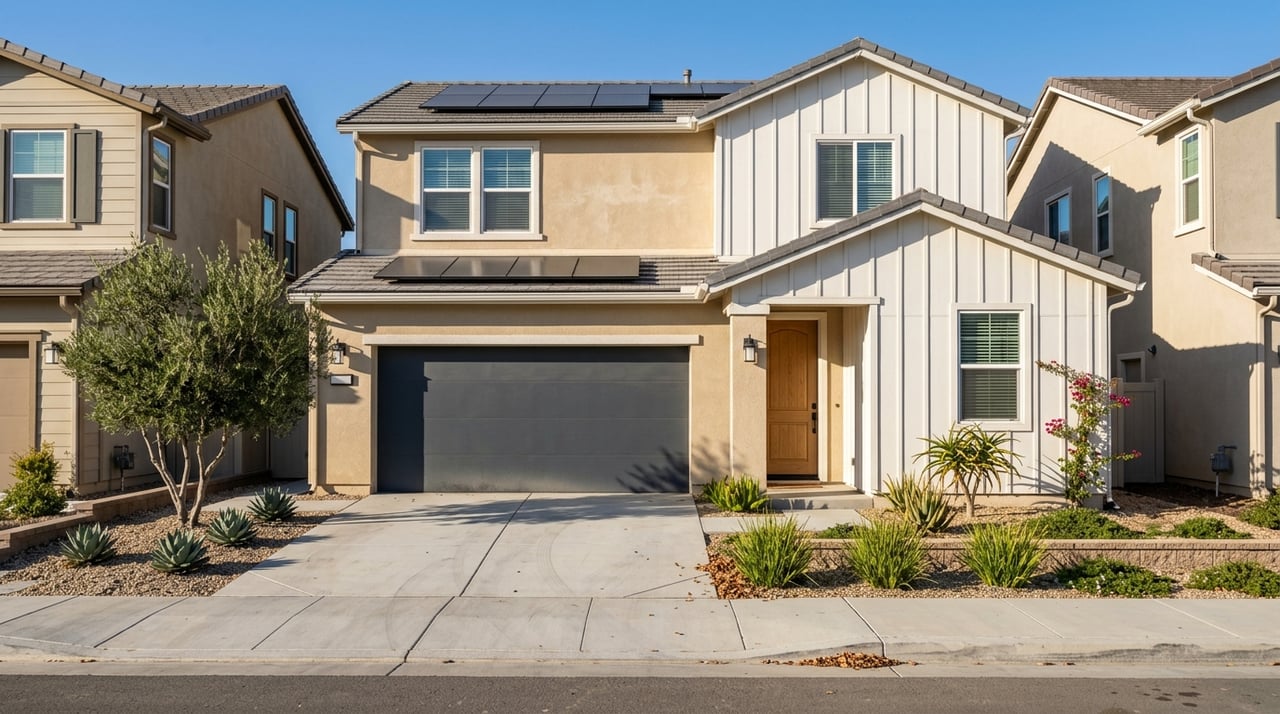
Santa Clarita vs Inland Empire: Which Move Makes Sense?
May 14, 2026
May 14, 2026
Wondering whether Santa Clarita or the Inland Empire makes more sense for your next move? It is a smart question, especially if you are trying to balance budget, commute, and the kind of neighborhood feel you want every day. The good news is that both options can work well, but they serve different priorities. Let’s break it down so you can compare them with more confidence.
If you zoom out, Santa Clarita generally stands out as the higher-priced, more established Los Angeles County suburban option. The Inland Empire often offers more home for the money, but it also includes a wide range of cities with different price points, layouts, and commute patterns.
That matters because the Inland Empire is not one single experience. Riverside, Corona, Temecula, Murrieta, Menifee, and Moreno Valley each sit at different points on the spectrum for home values, ownership rates, and neighborhood form. Your best fit depends on what you want your daily life to look like.
For many buyers, price is the clearest starting point. Based on Census data in this comparison set, Santa Clarita has the highest median owner-occupied home value at $784,700.
Several Inland Empire cities come in lower. Corona is $700,700, Temecula is $679,700, Murrieta is $639,800, Riverside is $584,800, Menifee is $537,300, and Moreno Valley is $503,700. If your goal is stretching your budget, Menifee and Moreno Valley stand out as the most value-oriented options in this group.
If you are shopping with a fixed budget, Inland Empire cities may open the door to a larger home, a newer layout, or a different lot configuration. Santa Clarita may still appeal if you are comfortable paying more for an established LA County suburb and its location advantages.
If you are selling and buying up, this comparison also helps frame expectations. A move to Santa Clarita may require a higher budget, while a move into parts of the Inland Empire could create more flexibility in home size or monthly payment.
Commute time is one of the biggest lifestyle factors in this decision. The average commute times in this comparison are fairly close, but there are still meaningful differences.
Santa Clarita averages 34.1 minutes. Corona is 34.3, Moreno Valley 35.5, Temecula 36.3, Murrieta 37.4, Menifee 41.5, and Riverside 31.3.
Santa Clarita has a practical advantage for many Los Angeles-bound commuters. The Santa Clarita station is on Metrolink’s Antelope Valley Line, and city transportation documents describe commuter rail service between Santa Clarita and the Los Angeles area.
That does not mean every trip will be easy, but it does support Santa Clarita’s position as a cleaner fit if your routine points toward Los Angeles. For buyers who want a suburban setting while keeping stronger ties to the LA job market, that can be a major plus.
The Inland Empire also has Metrolink corridors, including Riverside, Inland Empire-Orange County, 91/Perris Valley, Orange County, and San Bernardino lines. Still, service varies by line, and weekend service is not uniform.
In practical terms, many Inland Empire cities function more as freeway-first markets. If you work locally, have a flexible schedule, or value house-for-money more than an LA-facing commute, that tradeoff may feel very reasonable.
Price and commute matter, but so does the look and feel of the places you are considering. Santa Clarita and Inland Empire cities often offer different neighborhood patterns.
Santa Clarita’s planning documents describe the city as suburban in character, with low-density single-family neighborhoods, commercial corridors along major arterials, and business parks along Interstate 5 and Soledad Canyon Road. Its four original communities, Canyon Country, Newhall, Saugus, and Valencia, still keep distinct identities.
Santa Clarita offers a more cohesive suburban pattern overall. Canyon Country includes large-lot custom homes, tract homes, multi-family development, and mobile home parks, while Sand Canyon is described as a rural and equestrian pocket with estate homes and trail access.
For buyers, that means you can find variety within a city that still feels broadly connected and established. If you like the idea of a suburban environment with recognizable community areas and outdoor access, Santa Clarita may check a lot of boxes.
Inland Empire cities tend to offer more variation from one place to the next. Riverside, for example, includes both newer planned pockets and older urban neighborhoods, with areas like Orangecrest described as predominantly single-family and Mission Grove combining single-family homes, apartments, condominiums, retail, and office space.
Menifee presents a different model, with communities that range from rural to suburban and residential land uses clustered into four village areas. North of Salt Creek, neighborhoods are predominantly traditional or master-planned single-family, while areas south of Garbani Road are more rural.
Temecula and Corona lean more toward planner-driven suburban growth. Temecula has 14 specific plans governing land use and development, while Corona’s specific-plan framework is designed to master plan project areas and support a mix of housing choices, amenities, and open space.
This choice is not just about square footage. It is really about what kind of day-to-day lifestyle you want and which tradeoffs feel worth it.
Santa Clarita reads as the more established, higher-priced, and amenity-cohesive option in this comparison. The city maintains 38 miles of trails, and its open-space planning emphasizes preservation and greenbelt value, which reinforces an outdoor, master-planned feel.
Inland Empire alternatives often deliver more house for the money. In some cities, you may also find newer or larger master-planned neighborhoods, along with a wider range of suburban and rural-residential settings.
Different buyers will land in different places, even when they start with the same question. Here are a few simple ways to think about it.
If you are looking for more space, compare budget, lot size, and commute destination first. Santa Clarita may appeal if you want an established LA County suburb and can support the higher price point.
If you want more room to grow your lifestyle without pushing your budget as far, Inland Empire cities may give you stronger value. Menifee, Moreno Valley, and Riverside can each create a different kind of opportunity depending on your goals.
If your work, family routine, or lifestyle keeps you more connected to Los Angeles, Santa Clarita deserves serious consideration. If your move is more focused on maximizing space, exploring new-construction possibilities, or landing in a Riverside County suburb, the Inland Empire may offer more practical options.
Santa Clarita gives you variety inside one established city. The Inland Empire gives you variety across multiple cities, from mixed suburban settings in Riverside to village-style planning in Menifee to more master-planned frameworks in Temecula and Corona.
There is no one-size-fits-all winner between Santa Clarita and the Inland Empire. Santa Clarita is generally the stronger fit if you value an established suburban environment, Los Angeles-bound access, and a more cohesive amenity profile, but it comes with the highest price tag in this group.
The Inland Empire is often the better fit if you want more flexibility, more house for the money, or a broader mix of neighborhood styles. The key is not treating the region like a single market, because Riverside, Menifee, Temecula, Murrieta, Corona, and Moreno Valley each offer something different.
If you are weighing Riverside County options against Santa Clarita, the smartest next step is to compare your budget, commute, home size goals, and preferred neighborhood feel side by side. If you want help narrowing that down, Kimberly Ybarra can guide you through the tradeoffs and help you focus on the areas that fit your move best.
Stay up to date on the latest real estate trends.
Get assistance in determining current property value, crafting a competitive offer, writing and negotiating a contract, and much more. Contact me today.