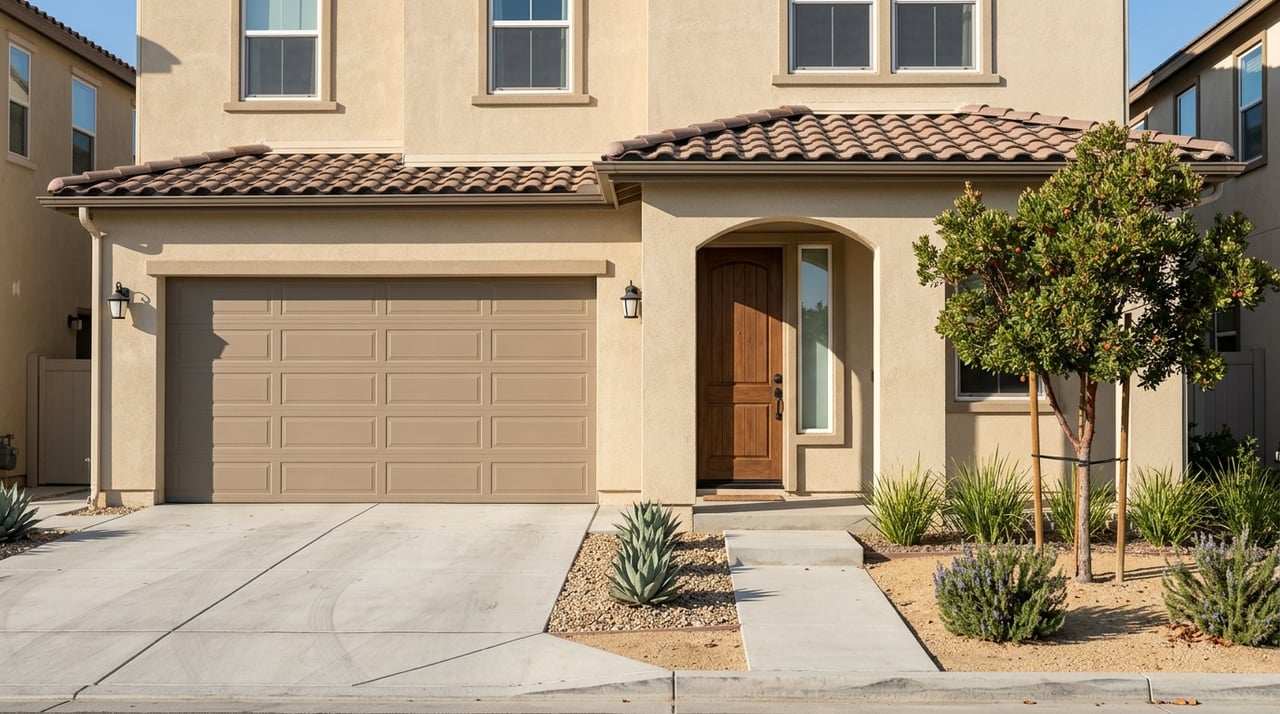
Planning Your Move: Relocating to Santa Clarita From the Inland Empire
April 2, 2026
April 2, 2026
Thinking about leaving the Inland Empire for Santa Clarita? You are not alone, but this move comes with a real price difference, a different commute picture, and a wider range of neighborhood options than many buyers expect. If you want a clear, practical look at what changes when you relocate, this guide will help you compare costs, communities, transit, and timing so you can plan with confidence. Let’s dive in.
If you are relocating to Santa Clarita from the Inland Empire, the biggest shift is usually home price. In February 2026, Santa Clarita’s median sale price was $795,500, compared with $640,000 in Riverside and $572,503 in Menifee, according to Redfin market data for Santa Clarita, Riverside, and Menifee.
That means Santa Clarita is about 24.3% more expensive than Riverside and about 39.0% more expensive than Menifee before you add closing costs and moving expenses. For many Inland Empire homeowners, this is a move-up purchase rather than a lateral move.
Santa Clarita is also not one uniform market. The citywide median can be helpful, but your actual budget will depend heavily on which part of the valley fits your goals.
Some buyers hear “Santa Clarita” and picture one price range. In reality, values can vary a lot from one community to another.
Here is a quick snapshot from February 2026:
| Community | Median Sale Price |
|---|---|
| Canyon Country | $710,000 |
| Newhall | $715,000 |
| Saugus | $790,000 |
| Valencia | $817,000 |
| Stevenson Ranch | $1.211 million |
Based on Redfin neighborhood data, Canyon Country and Newhall sit closer to the city median, while Valencia trends higher and Stevenson Ranch stands out as a much more expensive option.
That range matters if you are selling in Riverside, Menifee, or another Inland Empire suburb and trying to estimate what your next payment may look like. A buyer who can stretch into some parts of Santa Clarita may not be shopping the same homes in every community.
Santa Clarita’s market was described by Redfin as somewhat competitive in February 2026. Homes received about 2 offers on average and sold in roughly 72 days. The median sale price per square foot was $424.
For comparison, Riverside homes were selling in about 63 days, and Menifee homes in about 69 days. That tells you Santa Clarita may require patience on both the buying and selling side, even though well-positioned homes still attract attention.
If you are moving from the Inland Empire, this means your strategy should be built around your budget, your timing, and the specific Santa Clarita area you want. Looking only at a citywide average can lead to the wrong expectations.
According to the City of Santa Clarita community profile, the valley includes seven distinct communities and a mix of housing types, from estates to apartments, condos, senior housing, newer homes, and resale homes. That variety is one reason many relocating buyers keep Santa Clarita on their list.
Different communities offer different housing patterns, street layouts, and nearby amenities. If you are used to comparing Inland Empire neighborhoods by lot size, age of home, and freeway access, you will want to take the same street-by-street approach here.
The city describes Valencia as its most urban community. In the community character guidelines, Valencia is noted for newer development north of Newhall Ranch Road, paseos, parks, planned commercial areas, lush landscaping, and a pedestrian-friendly feel.
For buyers who want more planned-community structure and access to everyday conveniences, Valencia often stands out. It also tends to come with higher pricing than some other Santa Clarita areas.
Newhall is the historic core of the valley. The city describes it as having a downtown feel with Victorian, Western, and Mission Revival architecture, while Old Town Newhall is promoted as the arts and entertainment district with shopping, dining, The MAIN, and the Walk of Western Stars.
If you want a more historic setting and a traditional downtown environment, Newhall may be worth a closer look. Buyers often like that it feels distinct from newer tract-style development.
The city describes Saugus as one of Santa Clarita’s oldest communities and notes its rural character and largely built-out development pattern. That can appeal to buyers who want an established area rather than a newly expanding one.
Saugus had a median sale price of $790,000 in February 2026, which places it close to the citywide median. It can be a useful middle-ground option for buyers balancing cost and location.
Canyon Country is the largest population community in Santa Clarita. The city notes that the northern Sierra Highway area includes rural, very low-density homes on custom lots, while the broader community includes established suburban pockets.
With a median sale price of $710,000, Canyon Country can be one of the more accessible entry points into the Santa Clarita market. That said, home style, lot type, and exact location can vary quite a bit within the area.
Stevenson Ranch is not within Santa Clarita city limits, but the broader planning area includes it as part of the valley’s larger picture. The One Valley One Vision planning materials describe it as a largely built-out, master-planned county community west of Interstate 5 with regional commercial uses and parkland.
This is also where pricing changes sharply. At $1.211 million, Stevenson Ranch sits well above the broader Santa Clarita median, so it is important to know early whether it fits your budget.
Commute changes are another major reason people consider Santa Clarita. According to Census QuickFacts, the mean travel time to work was 34.1 minutes in Santa Clarita, compared with 31.3 minutes in Riverside and 41.5 minutes in Menifee.
That does not mean every commute will be shorter. It does mean Santa Clarita may land in a workable middle ground for some households, especially if your job centers are in northwest Los Angeles, Burbank, Century City, or Downtown LA.
Santa Clarita also offers more transit options than many buyers expect. Santa Clarita Transit runs commuter express service to Downtown Los Angeles, Burbank, Century City/UCLA/Westwood, Chatsworth/Canoga Park/Woodland Hills, and North Hollywood.
Local transit connections matter too. According to Santa Clarita Transit routes and schedules, Route 12 links the McBean Regional Transit Center to Canyon Country through Downtown Newhall, and Routes 5 and 6 connect Newhall and Stevenson Ranch with Canyon Country and stops near the Newhall and Santa Clarita Metrolink stations.
The city also opened the Vista Canyon Multi-Modal Center as its fourth Metrolink station on the Antelope Valley Line. For some buyers, that added rail access can make a big difference in daily planning.
Even so, many Santa Clarita neighborhoods still function as suburban, car-first communities. Transit can expand your options, but it will not replace driving for every household or every errand.
If schools are part of your relocation decision, the biggest practical point is simple: do not assume a neighborhood name tells you the school boundary. In Santa Clarita, attendance areas can be street-specific.
The William S. Hart Union High School District attendance boundary resources are helpful for verifying an address before you make an offer. This step can save you from making assumptions based on a listing description or community name.
Santa Clarita is served by multiple districts. The Newhall School District states that it serves part of Santa Clarita plus Stevenson Ranch and Westridge for UPK through 6th grade, with ten schools and nearly 6,000 students. The Saugus Union School District serves the Santa Clarita Valley with 14 elementary schools and one early learning academy for more than 9,200 prekindergarten through sixth-grade students.
For junior high and high school, the William S. Hart Union High School District lists 10 high school programs and 7 junior highs, and its site highlights a 96.8% graduation rate and 26 career technical education pathways. If this part of the move matters to you, confirming district and feeder patterns early should be part of your search plan.
If you already own a home in the Inland Empire, your sale may become the foundation for your Santa Clarita move. But based on current medians, many sellers will still need to bridge a noticeable price gap.
At current pricing, Santa Clarita is roughly $156,000 above Riverside and about $223,000 above Menifee. That difference can affect down payment planning, monthly payment comfort, and how much flexibility you have when choosing between communities.
It can help to think through your move in phases:
This kind of planning is especially important when you are moving from a market Kimberly Ybarra knows closely into a market where price differences can widen quickly from one community to the next.
A relocation works best when you stay focused on the tradeoffs. Santa Clarita can offer broader access to transit, a wide range of housing types, and several distinct communities, but the move often comes with a higher purchase price.
If you are comparing Santa Clarita with Riverside, Menifee, or another Inland Empire area, try to answer these questions early:
The clearer you are on those answers, the easier it becomes to separate a citywide headline from the neighborhoods that actually fit your life.
Relocating within Southern California can feel overwhelming, especially when you are selling in one market and buying in another. If you want help creating a smart plan from the Inland Empire to Santa Clarita, reach out to Kimberly Ybarra for a personalized consultation.
Stay up to date on the latest real estate trends.
Get assistance in determining current property value, crafting a competitive offer, writing and negotiating a contract, and much more. Contact me today.